Table of Contents
ToggleSummary First
This article on Rights of Orphans in Quran explains Islamic teachings about orphan care, protection, inheritance, and social justice.
It highlights Quranic guidance, Prophet Muhammad’s (PBUH) Sunnah, and community responsibility in ensuring compassion, fairness, and welfare for orphans.
Table of Contents
The Rights of Orphans in the Quran: A Comprehensive Overview
When I was a child, I knew Ahmed — a boy who lost both parents before turning ten. Despite his loss, he carried a quiet strength.
The community elders guided him with care, ensuring his education, meals, and dignity remained intact,
reflecting the timeless values of Respect for Elders in the Quran that promote compassion and honor for those of wisdom.
Ahmed’s journey reflects what the Quran teaches about justice and social responsibility.
It reminds us that caring for orphans is not charity alone but a sacred Islamic value rooted in mercy and fairness.
His life changed because people around him lived by these divine commands of compassion and protection.
The Quran identifies orphans as vulnerable members of society deserving protection, care, and respect. In Surah An-Nisa (4:2), Allah commands:
“And give to the orphans their property and do not exchange the bad for the good. And do not consume their property into your own. Indeed, that is ever a heinous sin.”
This ayah highlights the moral duty to preserve an orphan’s rights — including their inheritance and emotional wellbeing.
The verse forbids exploitation and promotes fairness, making it a foundation for orphan rights in Islamic law.
Islam’s guidance on care for orphans in the Quran connects deeply with orphan welfare, justice, and community duty.
Prophet Muhammad (ﷺ), himself an orphan, said: “I and the one who looks after an orphan will be like this in Paradise,” joining two fingers together.
This hadith reflects the immense reward tied to compassion and social responsibility.
The Quranic perspective on orphan care emphasizes that nurturing orphans with love and respect strengthens society, spreading mercy and preserving Islamic values of equity and faith.
Protecting Orphans in the Quran: Key Verses You Must Know
Fatima was a schoolteacher in a small village. Among her students was a quiet boy named Bilal, who had lost both parents.
Every day, she noticed how carefully he guarded his old books and worn shoes.
Fatima made it her obligation to protect his dignity — ensuring he had what he needed without making him feel less than others.
Her compassion reflected the true Islamic teachings on protecting orphans, where every believer is called to safeguard those left without guardians.
Her story mirrors the heart of Quranic verses about orphan care, built upon mercy and justice.
The Quran commands believers to preserve the wealth and rights of orphans, warning against injustice or misuse. Allah says in Surah An-Nisa (4:10):
“Indeed, those who devour the property of orphans unjustly are only consuming fire into their bellies, and they will be burned in the Blaze.”
This verse shows the gravity of exploiting orphans and underlines the duty to act with fairness.
The Prophet Muhammad (ﷺ) further emphasized in Sunan Ibn Majah:
“The best house among the Muslims is the house where there is an orphan who is treated well.”
This hadith highlights that protection and kindness toward orphans elevate one’s home in the sight of Allah — a lasting mark of faith and humanity.
How Islam Ensures Orphans’ Welfare: The Quran’s Teachings
Sheikh Omar Suleiman, a respected scholar and founder of the Yaqeen Institute in the USA, often recalls a visit to an orphanage in Syria.
He described how a young orphan hugged him and said, “You remind me of my father.”
That moment deeply moved him and strengthened his resolve to advocate for Islamic compassion and social justice.
His experience reflects the essence of Islamic welfare for orphans in the Quran, where care and well-being are not optional but sacred responsibilities.
Through sincere community involvement, Islam uplifts those without guardians, ensuring their dignity remains protected.
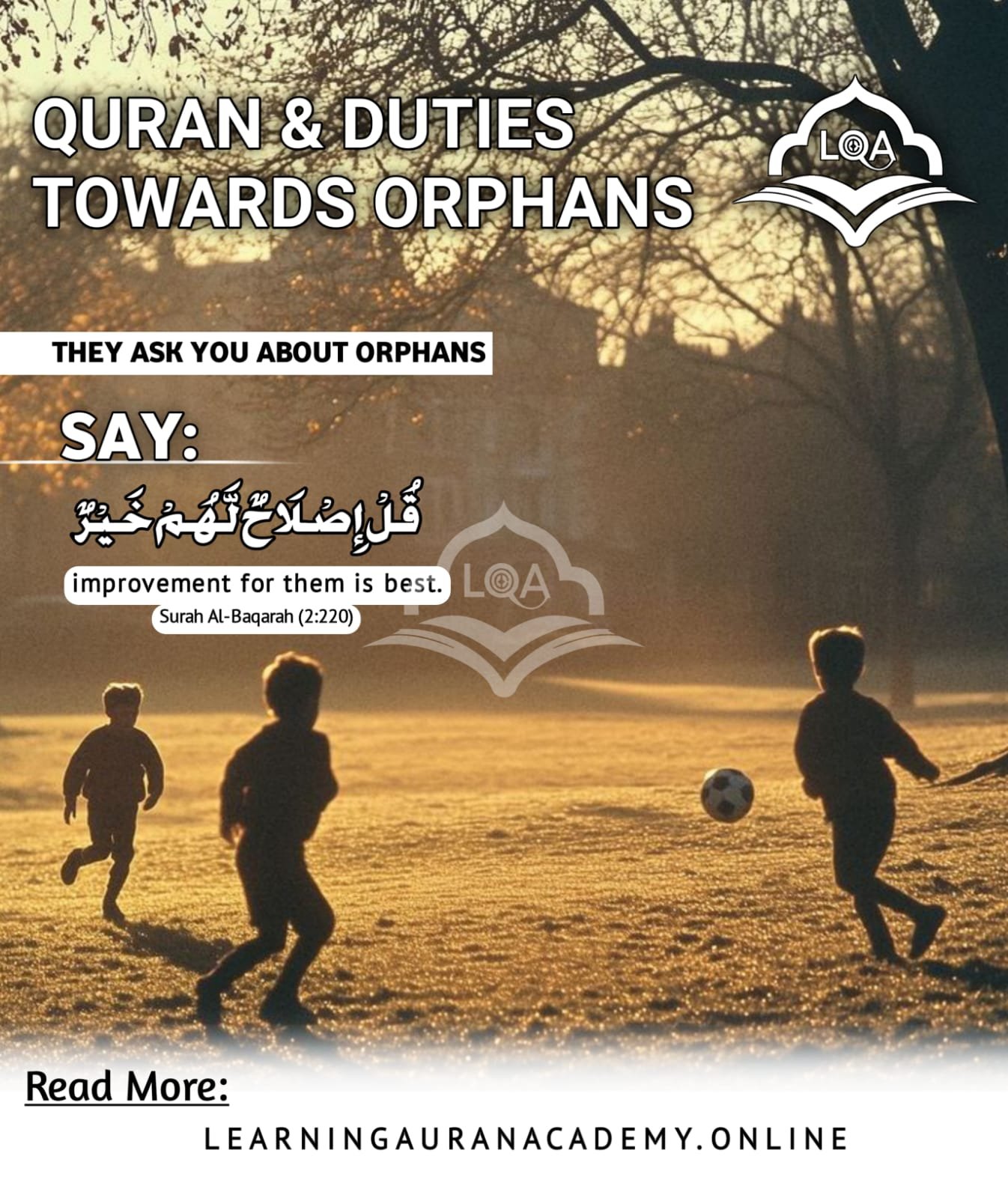
The Quran provides clear guidance on orphan welfare in Islam, emphasizing protection, fairness, and love. In Surah Al-Baqarah (2:220), Allah says:
“They ask you about orphans. Say, ‘Improvement for them is best. And if you mix your affairs with theirs – they are your brothers. And Allah knows the corrupter from the reformer.’”
This verse teaches believers that helping orphans should come with sincerity and integrity, not self-interest.
By ensuring the fair distribution of wealth and supporting orphans through charity and community care,
Islam guarantees their well-being and strengthens the bonds of brotherhood rooted in divine mercy and justice.
The Role of Society in Upholding Orphans’ Rights in Islam
Dr. Ingrid Mattson, a renowned Canadian Islamic scholar and advocate for children’s welfare, once shared a touching story from her visit to a Muslim orphan center.
She met a young girl who said, “When people visit us, it feels like we belong to a family again.”
That moment reminded Dr. Mattson of the social responsibility toward orphans in Islam — the duty of every community to create belonging, dignity, and love for those without guardians.
Her efforts reflect how Islamic society and orphan care are deeply connected to social justice and compassion.
In Islam, society carries a collective obligation to safeguard orphan rights through charity, legal fairness, and community support. The Prophet Muhammad (ﷺ) said in Sahih al-Bukhari:
“I and the one who cares for an orphan will be in Paradise like this,”
joining his index and middle fingers. This hadith highlights the immense spiritual reward for those who nurture orphans with kindness and protection.
Through orphan care responsibility in Islam, communities build institutions, support orphanages, and promote justice — fulfilling the divine call to uphold mercy and equity for every child.
Prophet Muhammad’s (PBUH) Guidance on Caring for Orphans
When Aisha (RA) once observed the Prophet Muhammad (PBUH) gently comforting a young orphan who had lost his parents, she said his eyes softened with compassion.
That moment became a living lesson in Sunnah orphan care, showing that true kindness is not only about material support but also about healing hearts.
The Prophet himself was an orphan, and his life became the ultimate model for Prophet Muhammad’s teachings on orphan care, where empathy and mercy guide every action.
His example continues to inspire Muslims to serve others with love and sincerity.
In Surah Ad-Duha (93:9), Allah commands:
“So as for the orphan, do not oppress him.”
This verse reflects the divine warning against neglect or injustice toward orphans, urging believers to treat them with dignity and fairness.
The Prophet’s guidance on orphan rights was rooted in emotional and social care — visiting, feeding, and nurturing orphans with affection.
Following the Sunnah of the Prophet (PBUH) means ensuring no orphan feels abandoned or forgotten.
Through care, justice, and compassion, Islam preserves their humanity and honors the legacy of mercy taught by the Messenger himself.
Orphans’ Inheritance Rights in the Quran: A Deep Dive
During a visit to an orphan care center in Africa, Mufti Ismail Menk met a young boy who had lost his father.
The child’s relatives had taken his father’s property, leaving him with nothing.
Mufti Menk, deeply moved, spoke about justice and inheritance rights in Islam, reminding the community that protecting an orphan’s wealth is not only a legal matter but a sacred duty.
His words reflected the essence of orphan inheritance rights in the Quran, where fairness and mercy stand at the heart of every ruling.
The Quran inheritance for orphans is clearly defined in Surah An-Nisa (4:7):
“For men is a share of what the parents and close relatives leave, and for women is a share of what the parents and close relatives leave, be it little or much – an obligatory share.”
This verse ensures that every rightful heir, including orphans, receives their due.
Denying or misusing an orphan’s inheritance is considered a grave sin in Islamic inheritance law for orphans,
as it violates both divine justice and human compassion — values that uphold the moral fabric of society.
Why Orphans’ Rights Are Central to Social Justice in Islam
When a community in Medina once gathered to support a group of orphaned children after a drought, it became a living example of equity and fairness.
Their unity showed why social justice for orphans in Islam is not just moral advice but a sacred obligation.
Islam teaches that justice begins with protecting the vulnerable — those without parents, wealth, or power — so that every person feels valued and secure. This compassion builds a society rooted in mercy and equality.
The Quranic views on social justice and orphans remind believers that caring for orphans is part of worship itself. The Prophet Muhammad (ﷺ) said in Sahih Muslim:
“Whoever relieves a believer’s distress from the distress of this world, Allah will relieve his distress from the Day of Judgment.”
This hadith links social justice directly to divine reward, showing that helping others brings both worldly peace and eternal mercy.
Through orphan rights and social equity, Islam ensures that no one is left behind — strengthening communities with love, justice, and sincere compassion.
Compassion for Orphans in Islam: A Call for Empathy
Malala Yousafzai, the youngest Nobel laureate and a voice for vulnerable children, once shared a touching story from her visit to a refugee camp.
She met a young orphan girl who said, “I just want to go to school like other children.”
That moment reminded Malala of the deep empathy and compassion Islam teaches toward those left without family support.
Her mission to provide education and dignity reflects the heart of Islamic compassion for orphans, where care becomes a moral duty and a path to divine blessings.
In Surah Al-Baqarah (2:215), Allah says:
“They ask you what they should spend. Say, ‘Whatever you spend is for parents and relatives and orphans and the needy and the traveler.’”
This verse reveals that caring for orphans through charity and kindness is an act of sincere faith.
The Quranic call for compassionate care for orphans reminds believers that empathy connects them to Allah’s mercy.
Through love, fairness, and care, Islam nurtures a society where every orphan is valued and protected.
Practical Ways to Help Orphans: How You Can Make a Difference
Sir Richard Branson, founder of Virgin Unite, once shared how visiting an orphanage in Africa changed his view of charity and support.
Seeing children smile despite their hardships inspired him to fund education and healthcare projects for them.
His experience reflects the spirit of helping orphans Islamically, where genuine care and action transform lives.
Islam calls not only for empathy but also for practical steps—through donations, education, and community initiatives—to uplift those in need and give them a brighter future.
The Prophet Muhammad (ﷺ) said in Sahih Bukhari:
“He who cares for an orphan and myself will be together in Paradise like this,”
joining his two fingers together. This hadith shows the immense spiritual reward promised to those who actively support orphans.
Quranic guidelines for orphan care encourage help through financial aid, mentoring, and emotional compassion.
By offering education, vocational training, and charitable support, believers not only fulfill a divine duty but also reflect the teachings of the Quran and daily life, strengthening humanity with mercy and justice.
Enroll in Our Islamic Family Care Course: Support Orphans in Islam
Join our Islamic family care course and discover how Islam beautifully teaches compassion and responsibility toward orphans.
This online course in Learning Quran Academy offers a deep understanding of orphan care education,
guiding learners through Quranic principles and Prophetic teachings that inspire kindness, justice, and mercy.
By enrolling, you’ll explore how to practically support orphans—through charity, mentorship, and community care—in light of Islamic teachings.
The course on Islamic family care and orphan rights empowers you to fulfill your religious duty with knowledge and sincerity.
Begin your journey today, learn how to help orphans Islam course, and make a real difference guided by faith and compassion.
conclusion
Caring for orphans in Islam is a noble obligation rooted in Quranic guidance, justice, and compassion.
Believers are encouraged to uphold orphans’ rights in the Quran and protect their well-being with kindness.
Through social responsibility toward orphans in Islam, communities can ensure fairness, equity, and support for every child without parents.
Following Prophet Muhammad’s teachings on orphan care, we are urged to offer love, charity, and protection.
By learning more and acting with sincerity, every person can help secure a brighter future for orphans and earn countless blessings.