Table of Contents
ToggleSummary First
This article explores Truth and honesty in the Quran, covering Quranic teachings, Prophet Muhammad’s guidance, personal integrity, social trust,
consequences of lying, practical ways to practice honesty, and an Islamic ethics course for applying these values in daily life.
Table of Contents
Introduction to Truth and Honesty in the Quran
I remember vividly a lesson my father taught me when I was young.
One afternoon, while we were repairing the fence in our backyard, he noticed I was hesitant to admit a small mistake I had made.
He gently said, “Always speak the truth, even if it is hard, because honesty builds trust and shapes your character.”
That moment left a lasting impact on me. Observing my father’s daily life, where he always acted with integrity and transparency, I learned that truthfulness is not just about words—
it is about living with righteousness and moral responsibility.
The Quran places great emphasis on truth and honesty. Allah says:
“And do not mix the truth with falsehood or conceal the truth while you know [it].” (Quran 2:42).
This verse teaches that honesty is a divine command, central to ethical conduct and spiritual growth.
Concealing the truth is forbidden, and upholding it aligns a person with Quranic values.
Practicing honesty in daily life fosters integrity in Islam, strengthens moral behavior, and reflects righteousness in both personal and social conduct.
Following these teachings, as my father demonstrated, helps Muslims lead a life guided by ethical principles and divine favor.
What the Quran Says About Truth and Honesty
I remember my father telling me a story about Abu Bakar, may Allah be pleased with him. Once, he was asked to give testimony in a dispute where his close friend was involved.
Despite the pressure, Abu Bakar chose to speak the truth, even though it was difficult.
His honesty resolved the matter fairly and gained the trust of the entire community.
My father explained that this moment taught him an important lesson: truthfulness is not only a virtue but also a responsibility for every believer.
Observing Abu Bakar’s actions, I realized that honesty shapes character, fosters respect, and strengthens social bonds.
The Hadith clearly emphasizes the importance of truth in a believer’s life:
“Truth leads to righteousness, and righteousness leads to Paradise.” (Sahih Bukhari).
This teaching highlights that honesty is not merely a personal choice—it is a guiding principle for ethical living.
By practicing truthful speech and following Islamic ethics, a believer fulfills their duty, cultivates integrity, and aligns with the values exemplified by Abu Bakar.
Honesty in Islam ensures moral behavior in personal relations, legal matters, and everyday interactions. Through truthful living, Muslims uphold ethical guidelines,
earn respect in society, and follow the path that leads to spiritual success, as promised in the Hadith.
The Role of Truth in Islam: A Guiding Principle for Believers
I recently read about Francesca Gino, a behavioral scientist who studies honesty and ethical behavior
In one experiment, she observed how people faced moral dilemmas in everyday situations—some chose convenience over truth, while others risked personal loss to act ethically.
Her research revealed that ethical behavior strengthens trust, improves relationships, and enhances social harmony.
This resonates deeply with Islamic teachings, showing that truthfulness is not just a personal trait but a universal guiding principle.
In Islam, truth plays a central role in shaping a believer’s moral compass. Allah commands:
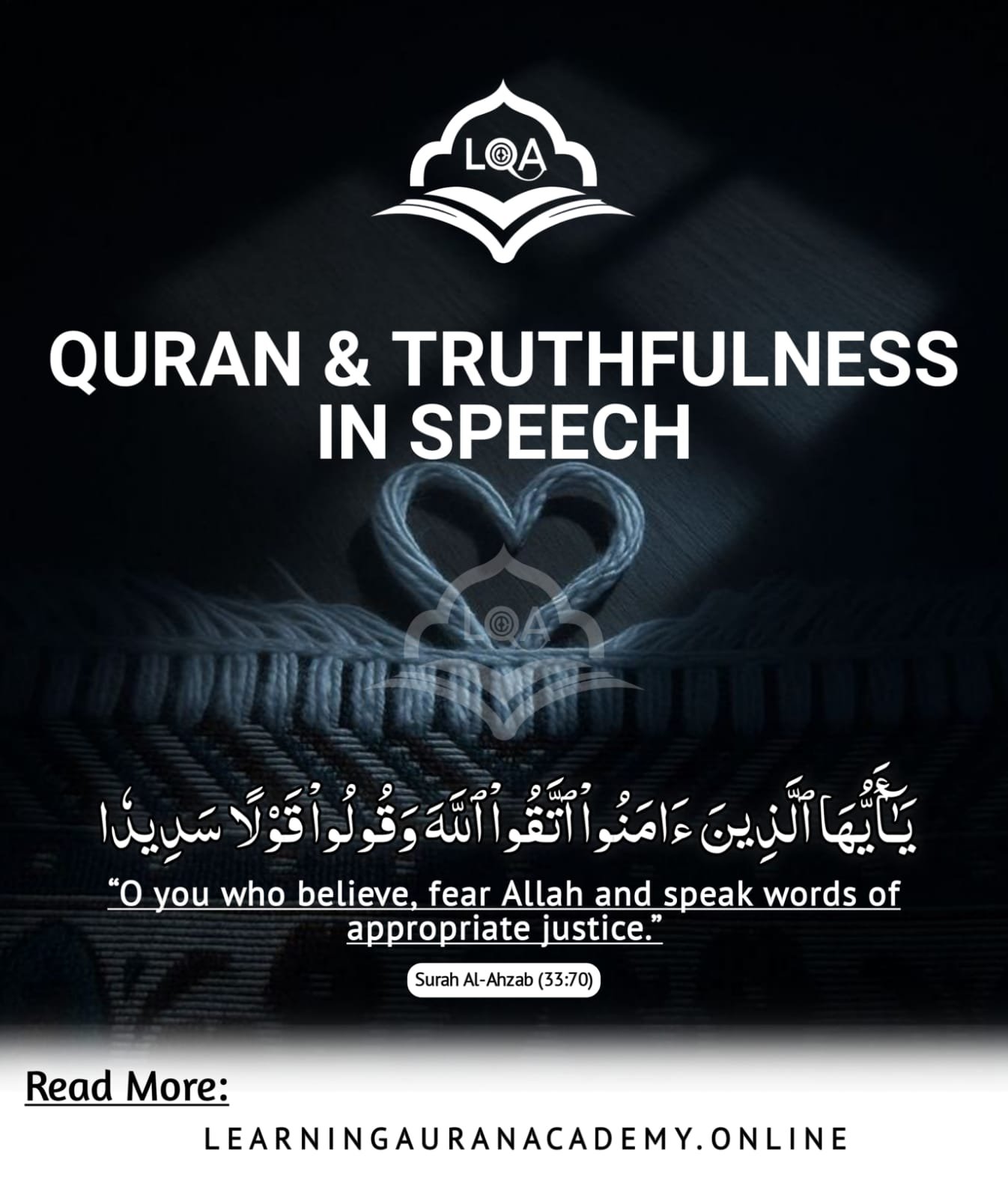
“O you who have believed, fear Allah, and speak words of appropriate justice.” (Quran 33:70).
This ayah emphasizes that speaking truthfully is essential for righteousness and aligns believers with Allah’s will.
Upholding honesty in belief influences every interaction, strengthens trust in Islam, and provides a path to righteousness.
By practicing truthfulness, Muslims embody ethical values, maintain righteous behavior, and follow a life guided by Islamic faith.
Truth as a guiding principle ensures that every action reflects integrity, moral responsibility, and devotion to Allah.
The Consequences of Lying and Deceit in the Quran
The Quran strongly warns against lying and deceit, highlighting the harm they cause to individuals and society.
Dishonesty disrupts peace, spreads corruption, and leads to sinful acts that affect both personal character and communal trust.
Islam emphasizes that lying is a serious transgression with consequences in this world and the Hereafter.
The Hadith reinforces this principle:
“The signs of a hypocrite are three: When he speaks, he lies; when he promises, he breaks his promise; and when he is trusted, he betrays that trust.” (Sahih Bukhari).
This teaching underscores that deceptive behavior marks a moral failure and leads to social harm.
By adhering to truthfulness, believers uphold Islamic justice and fulfill their duty toward ethical conduct.
Avoiding deceit strengthens trust in Islam, promotes honesty in belief, and protects the community from conflict and corruption.
Following these Quranic warnings ensures accountability in Islam, encourages righteous behavior, and aligns a believer’s life with ethical values.
Truthful living is not only a moral responsibility but a foundation for harmony and integrity in society.
Prophet Muhammad’s (PBUH) Teachings on Truth and Honesty
I once read an interview with Elaine Englehardt, a professor of ethics and philosophy, who studies honesty and moral theory.
She described a classroom experiment where students faced ethical dilemmas, choosing between personal gain and truthful action.
Those who acted honestly, even at a cost, reported stronger self-respect and trust from peers.
Her findings echo the lessons of Islam, showing that truthfulness is not just ethical but transformative, shaping character and society.
Prophet Muhammad (PBUH) exemplified the highest standards of truth and honesty in every word and action.
His life teaches that truth leads to goodness, while lying brings destruction. The Quran emphasizes this principle:
“Say, ‘My Lord has commanded justice and that you maintain yourselves [in worship] of Him at every place or time of prostration…'” (Quran 7:29).
This verse shows that justice and honesty are central to Islamic worship and moral conduct.
Following the Prophet’s example encourages sincere living, strengthens personal integrity, and fosters ethical principles.
Speaking the truth, even against oneself, cultivates a believer’s honest character, aligns with the teaching of Muhammad, and nurtures sincerity in Islam.
How Truth and Honesty Foster Trust and Justice in Society
She shared an experience from a research seminar where students discussed honesty as an epistemic virtue.
One student admitted to exaggerating a result to appear more competent, which caused tension among peers.
Zagzebski explained that truthful communication fosters trust, strengthens social bonds, and upholds ethical standards—lessons that closely align with Islamic teachings on honesty and justice.
Observing this scenario highlighted how honesty is not merely personal integrity but a cornerstone of a healthy, ethical society.
“Do not envy one another, do not turn your backs on one another, do not hate one another, and do not undercut one another in trade. But be servants of Allah, as brothers.” (Sahih Muslim).
This teaching emphasizes that fair and peaceful coexistence depends on honesty, trust, and ethical behavior.
By practicing truthfulness, believers strengthen community cohesion, ensure justice and fairness,
and promote social harmony, creating a society aligned with Islamic ethical principles, showing how guidance from the Quran and daily life can shape ethical behavior.
The Connection Between Truth and Personal Integrity in Islam
I recently read about Daniel K. Sokol, a medical ethics expert, who studies truth-telling and deception in the medical field.
He shared an experience where a doctor faced a dilemma: revealing a serious diagnosis truthfully to a patient or withholding it to avoid distress.
By choosing honesty, the doctor not only maintained professional integrity but also strengthened the patient’s trust and well-being.
Sokol explained that such truthful practice fosters moral character, reinforces personal ethics, and reflects consistency between words and actions—lessons that closely resonate with Islamic teachings on truth and integrity.
In Islam, truthfulness is essential for personal integrity and character building. Allah says:
“Indeed, this Quran guides to that which is most suitable…” (Quran 17:9).
This verse shows that following divine guidance and truth strengthens a believer’s morals and aligns their actions with faith.
A truthful Muslim demonstrates honesty in every aspect of life, cultivating inner integrity and embodying ethical principles.
Upholding truthfulness not only reinforces faith and truth but also enhances character, honest living, and a Muslim’s identity, ensuring consistency between words and deeds.
Practical Ways to Uphold Truth and Honesty in Daily Life
Upholding truth and honesty in everyday life is a core principle in Islam that strengthens both personal character and social trust.
Muslims are encouraged to be truthful in all dealings, avoiding gossip, slander, and false promises.
This ensures that relationships—whether personal, professional, or social—are built on integrity and mutual respect.
The Hadith emphasizes the importance of careful speech:
“Whoever believes in Allah and the Last Day, let him speak good or remain silent.” (Sahih Bukhari).
This teaching highlights that practicing honesty is not limited to avoiding lies but extends to speaking positively and truthfully, reflecting Islamic values in practice.
Practicing daily truthfulness also involves integrity in actions. From business transactions to community interactions, a Muslim should maintain honesty in both words and deeds.
By applying real-life honesty, believers strengthen Muslim conduct, uphold ethical standards, and cultivate integrity in life.
Everyday ethics rooted in truth ensure that honesty in action becomes a habitual part of life,
creating a society where Islamic values guide behavior and promote fairness, trust, and ethical living.

Join Our Islamic Ethics Course: Understanding the Quranic Teachings on Truth and Honesty
Our academy offers an online tarbiyah course in learning Quran academy that explores Quranic teachings on truth and honesty.
This Islamic ethics course provides a deep Quranic understanding of truthfulness, helping students recognize its importance in personal, social, and professional life.
Through practical examples, participants learn how to implement ethical principles from the Quran and Hadith to address modern-day challenges.
The course focuses on truth in Islam, fostering honesty in action and thought.
Designed for accessible religious learning and Quranic education, this educational course equips learners to cultivate integrity,
strengthen moral character, and practice Islamic values consistently.
conclusion
Truth and honesty are central to Islamic teachings, shaping both personal integrity and societal harmony From Quranic guidance to the Prophet’s example,
these principles promote ethical conduct, social trust, and moral responsibility, highlighting the importance of Quran and Charity in fostering generosity and ethical behavior.
By understanding Quranic teachings about truth and honesty and practicing daily truthfulness, believers strengthen their Islamic faith, develop a moral compass, and uphold honesty in action.
Enrolling in an Islamic ethics course on truthfulness further deepens Quranic understanding, providing practical tools to integrate truth in Islam into everyday life.