Table of Contents
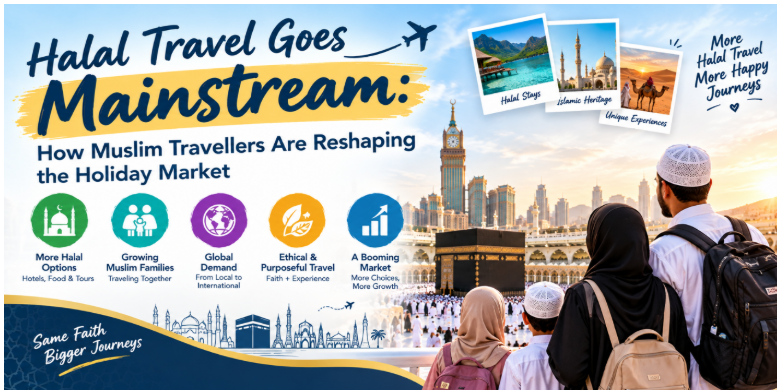
ToggleHalal Travel Goes Mainstream: How Muslim Travellers Are Reshaping the Holiday Market
For a long time, the travel industry treated Muslim travellers as a niche. Pilgrimage was handled by small specialist agents, and everything else was left to families to work out for themselves: finding halal food abroad, checking whether a hotel had somewhere to pray, or hunting for a pool where women could swim in private. That picture is changing quickly, and the numbers explain why.
According to the 2026 Global Muslim Travel Index from Mastercard and CrescentRating, Muslim international arrivals were forecast to reach around 196 million in 2025, and the figure for 2030 has been raised to 262 million, with yearly spending expected to hit about US$310 billion. A large slice of that spending comes from pilgrimage, and the market for Umrah Packages from UK agents alone serves a very large number of British Muslims every year. But the fastest change is happening outside Makkah and Madinah, in ordinary family holidays.
Who the new Muslim traveller is
The typical Muslim traveller today is younger, more digital and more demanding than the stereotype. Many are second or third-generation Britons, comfortable booking online, used to comparing reviews and keen to travel more than once a year. They want the same things any traveller wants, such as good value, comfort and new experiences, plus a few things that matter for their faith.
The same index found that around 80% of Muslim travellers now use AI tools when planning trips, which shows how quickly habits are moving online. It also noted that demand is spreading beyond the traditional big source markets, as diaspora communities in places like Britain travel more.
What “halal travel” actually means
The phrase covers a range of needs, and not every traveller wants all of them. The most common are:
- Halal food. Either fully halal kitchens or clearly labelled halal options.
- Prayer facilities. A prayer room, a qibla direction in the room, prayer mats on request, and prayer times available.
- Alcohol-free settings. Some families prefer hotels where alcohol isn’t served, or at least isn’t central to the experience.
- Privacy for women. Separate pools, spas or beach areas for women and families.
- Ramadan support. Pre-dawn meals and iftar for guests who are fasting.
Hotels and destinations that get these basics right, and are open about what they offer, are winning repeat customers.
The rise of halal holidays
The biggest shift is in leisure travel. Halal Holidays have grown from a handful of specialist resorts into a recognised part of the market, with dedicated travel firms, booking sites and resorts. Turkey’s south coast, Malaysia, Morocco, the UAE and parts of Southeast Asia are among the best-known destinations, offering everything from alcohol-free beach resorts to villas with private pools.
For British Muslim families, this has opened up options that simply weren’t easy to find twenty years ago. A family can now book a sunshine break where the food is halal, the pool has women-only hours and there’s a prayer room down the corridor, all through a single booking.
Non-Muslim destinations are paying attention too. The 2026 index placed the UK joint third among non-OIC destinations for Muslim travellers, alongside Taiwan, which reflects the country’s large Muslim community, wide availability of halal food and growing awareness among hotels and attractions.
Pilgrimage is still the anchor
Despite the growth in leisure travel, pilgrimage remains at the heart of Muslim travel. For many families, Umrah is the most important trip they’ll take, and it often comes first in the budget.
Saudi Arabia has made major changes to make Umrah easier, including online visas, the Nusuk app for permits, and the Haramain high-speed railway between Makkah and Madinah. These reforms, together with easier booking from the UK, mean more people are going, and going more than once.
There’s also a growing trend of combining the two: an Umrah followed by a few days of rest somewhere else, such as Dubai, Istanbul or Jordan. Travel companies have started to package these trips together, which gives families a spiritual journey and a holiday in one.
Technology is changing how trips are booked
The way Muslim travellers plan has moved online almost entirely. Apps now show prayer times and the qibla direction anywhere in the world, map halal restaurants and mosques nearby, and let users filter hotels by halal food or women-only facilities. Pilgrims use the official Nusuk app to book their Umrah permit and visits to the Rawdah in Madinah, and many visas are now applied for online in minutes.
Social media plays a big part as well. British Muslim travel bloggers and video makers share honest reviews of hotels, resorts and Umrah trips, and families increasingly trust these over glossy adverts. A single post showing a hotel that didn’t live up to its promises can travel a long way.
The challenges that remain
Not everything is easy. Prices for pilgrimage at peak times, such as Ramadan and the Christmas holidays, have risen sharply, putting the trip out of reach for some families. Hajj places for British pilgrims are limited by a national quota and booked through Saudi Arabia’s official Nusuk Hajj platform, which leaves many people waiting years. And scams aimed at pilgrims, especially through social media and fake websites, remain a real problem that UK Trading Standards teams have warned about.
What businesses are getting right, and wrong
For travel businesses, the opportunity is clear, but so are the pitfalls. The firms doing well tend to share a few habits:
- They’re honest about what’s on offer, rather than using “halal” as a vague marketing label.
- They make information easy to find, such as whether a kitchen is halal-certified or simply has halal options.
- They understand the calendar, planning for Ramadan, Eid and school holidays, when demand from Muslim families peaks.
- They build trust, with clear licensing, such as ATOL protection in the UK, and real reviews.
The Global Muslim Travel Index makes the same point: destinations and providers that travellers trust before they arrive are likely to do better than those relying only on facilities.
The mistakes are equally familiar. Calling a hotel “Muslim-friendly” because it has one halal dish on the menu, or failing to deliver on promises about privacy, quickly leads to bad reviews in a community where word of mouth spreads fast.
Tips for British Muslim travellers
If you’re planning a halal holiday or an Umrah trip, a few simple checks will help:
- Ask exactly what “halal-friendly” means for that hotel or package.
- Check whether food is halal-certified, and by whom.
- Confirm women-only facilities and their opening times.
- Book through a licensed UK travel firm with ATOL protection.
- Read recent independent reviews from other Muslim travellers.
- Book early for Ramadan, Eid and the school holidays.
Looking ahead
Halal travel is no longer a side market. It’s a large and fast-growing part of global tourism, driven by younger, connected travellers who know what they want. For British Muslims, that means more choice, better service and fewer compromises. For travel businesses, it means that understanding the needs of Muslim travellers is becoming less of a specialism and more of a basic requirement.