
Table of Contents
ToggleQuranic Principles for Life: 18 Powerful Lessons to Follow
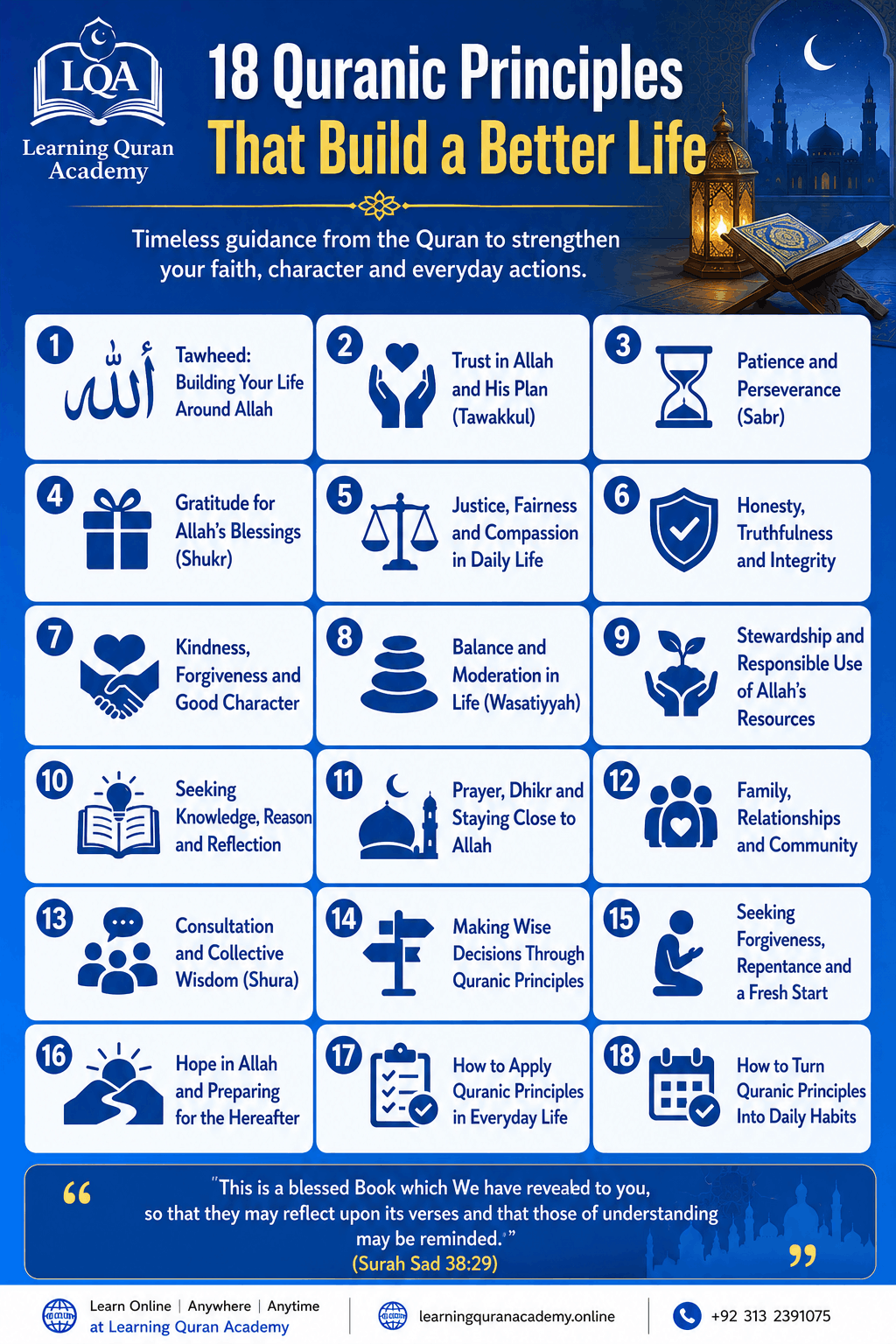
Quranic principles for life provide Quranic guidance for making everyday decisions with faith and purpose. The principles of the Quran include Islamic principles, Quranic teachings, and moral values that shape an Islamic way of life. For Muslims, living according to Quran means using its divine guidance, spiritual guidance, and practical Quranic guidance to understand the purpose of life and apply its life lessons from Quran to daily life.
1. Tawheed: Building Your Life Around Allah
Tawheed means believing in the oneness of Allah and recognizing Him as the Creator and Lord. It shapes how a Muslim understands faith, worship, and everyday choices. When Allah’s sovereignty remains at the centre, divine guidance gives life direction and helps a believer set the right purpose and spiritual priorities. This is the foundation of living by Quranic principles with sincere intention and God-consciousness.
2. Trust in Allah and His Plan (Tawakkul)
Tawakkul means placing your trust in Allah while continuing to make a sincere effort. Life brings uncertainty, challenges, and difficult moments, but faith in Allah’s divine wisdom helps a believer remain hopeful. During difficult times, Tawakkul can bring peace, patience, and spiritual strength, allowing a person to face each situation with perseverance, contentment, and confidence in Allah’s plan.
3. Patience and Perseverance (Sabr)
Sabr teaches a Muslim to remain steady through hardship, trials, and difficulties. Patience in Islam does not mean giving up; it means responding to loss, stress, or disappointment with steadfastness and trust in Allah.
- Perseverance develops resilience and emotional strength.
- Endurance during hardship can lead to spiritual growth.
- A believer remains hopeful in the reward from Allah.
4. Gratitude for Allah’s Blessings (Shukr)
Shukr means recognizing Allah’s blessings and responding with genuine gratitude. A thankful heart notices everyday gifts such as health, family, knowledge, and provision, rather than taking them for granted.
Practising gratitude in Islam encourages contentment and a positive outlook. It helps a person recognize the abundance already present and appreciate Allah’s favors, supporting spiritual growth.
5. Justice, Fairness and Compassion in Daily Life
Islam connects justice, fairness, and compassion with everyday conduct. Adl calls for fairness, while Rahmah encourages mercy and kindness toward others.
This includes:
- Respecting human dignity, rights, and equality.
- Maintaining honesty and ethical conduct.
- Practising fairness in business and family justice.
- Showing kindness and respectful treatment.
- Accepting responsibility and accountability through Islamic ethics and moral responsibility.
6. Honesty, Truthfulness and Integrity
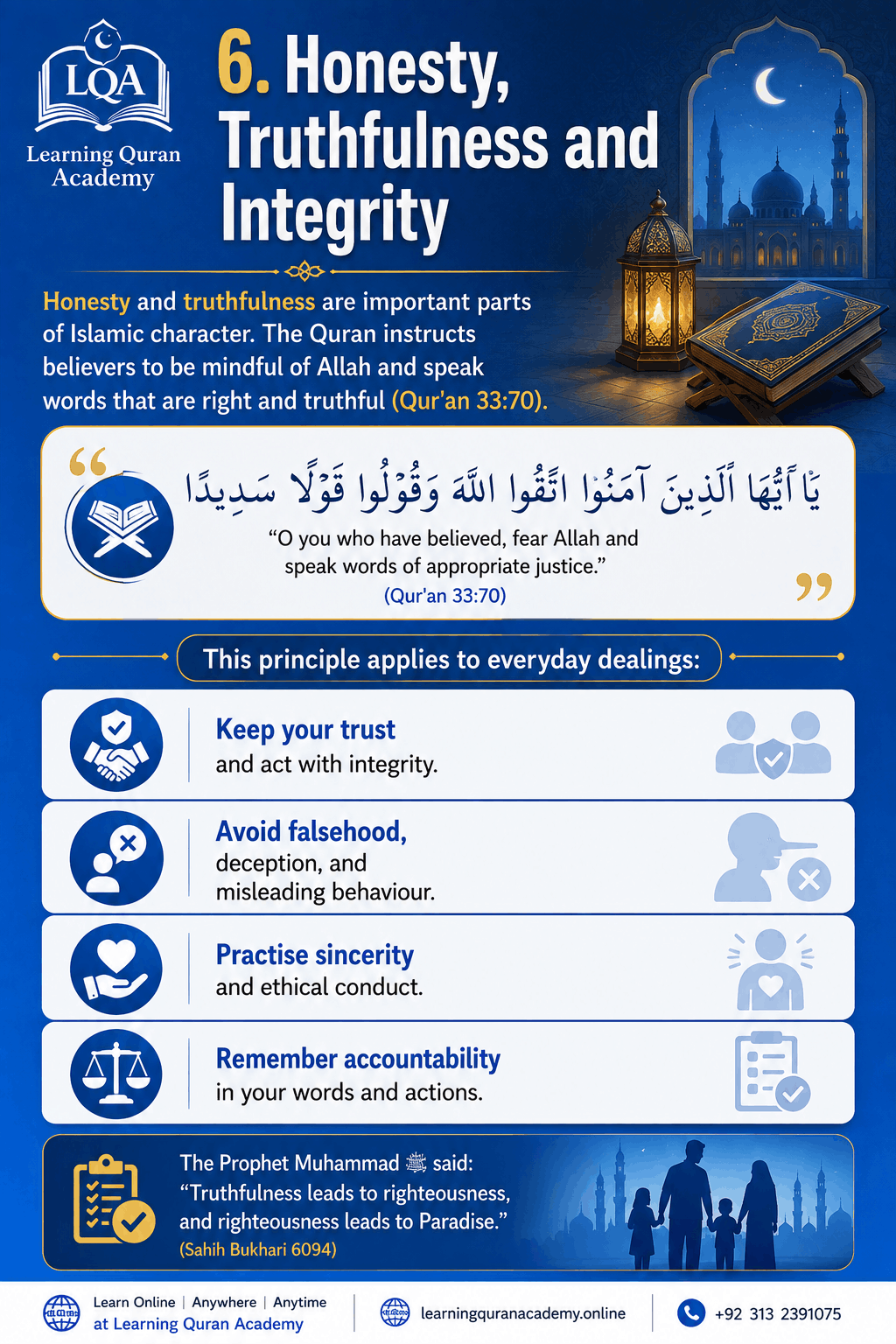
Honesty and truthfulness are important parts of Islamic character. The Quran instructs believers to be mindful of Allah and speak words that are right and truthful (Qur’an 33:70).
This principle applies to everyday dealings:
- Keep your trust and act with integrity.
- Avoid falsehood, deception, and misleading behaviour.
- Practise sincerity and ethical conduct.
- Remember accountability in your words and actions.
7. Kindness, Forgiveness and Good Character
Good character is shown not only through kindness but also through how we respond when others hurt us. The Quran praises those who control their anger and pardon others, describing them among the good-doers (Qur’an 3:134).
- Show kindness, compassion, and mercy.
- Practise forgiveness instead of holding onto anger.
- Use empathy, patience, and respect in relationships.
- Encourage reconciliation and protect family and community bonds.
8. Balance and Moderation in Life (Wasatiyyah)
Good character is shown not only through kindness but also through how we respond when others hurt us. The Quran praises those who control their anger and pardon others, describing them among the good-doers (Qur’an 3:134).
- Show kindness, compassion, and mercy.
- Practise forgiveness instead of holding onto anger.
- Use empathy, patience, and respect in relationships.
- Encourage reconciliation and protect family and community bonds.
9. Stewardship and Responsible Use of Allah’s Resources
Islam teaches that wealth, provision, and the earth are a trust (Amanah). This means using Allah’s resources responsibly rather than wasting them.
- Practise responsible consumption and spending wisely.
- Avoid waste and support charity and generosity.
- Show financial responsibility and care for the environment.
- Adopt sustainable living as part of Islamic stewardship.
The Quran warns against wastefulness and corruption on earth (Qur’an 7:31; 2:205).
10. Seeking Knowledge, Reason and Reflection
Islam encourages seeking knowledge, using reason (Aql), and reflecting deeply on revelation. Tadabbur helps a Muslim move beyond simply reading the Quran toward understanding its meaning and lessons.
Regular learning, Quranic reflection, and self-reflection can strengthen wisdom, discernment, and decision-making. Beneficial knowledge also supports education and healthy intellectual growth, helping believers apply what they learn wisely.
11. Prayer, Dhikr and Staying Close to Allah
Salah, Dhikr, and dua help a believer maintain closeness to Allah throughout daily life. Regular Quran recitation, Istighfar, repentance, and Selawat can strengthen faith and spiritual growth. The Quran specifically connects remembrance of Allah with tranquility of the heart: “Surely, in the remembrance of Allah do hearts find comfort” (Qur’an 13:28).
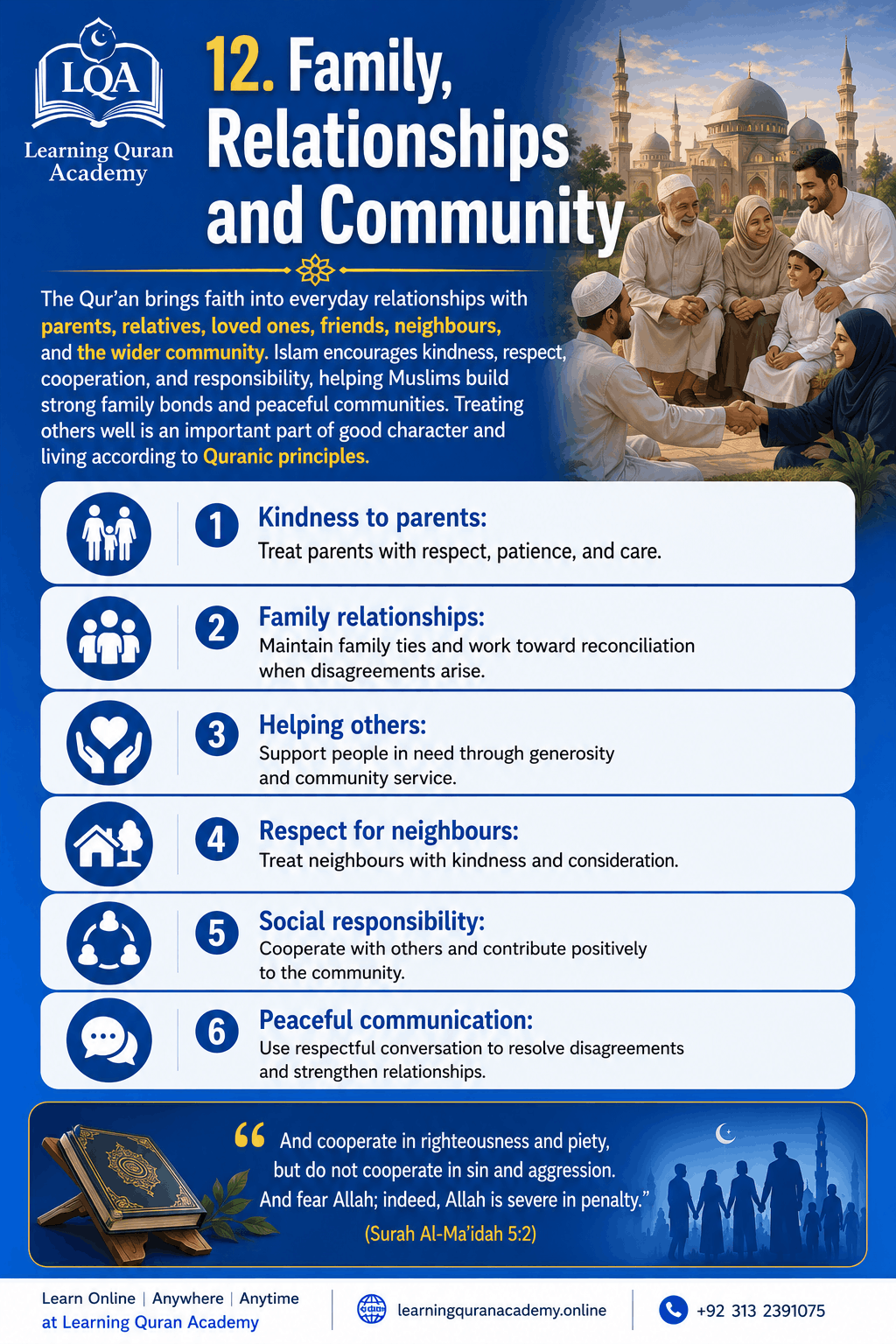
12. Family, Relationships and Community
The Qur’an brings faith into everyday relationships with parents, relatives, loved ones, friends, neighbours, and the wider community. Islam encourages kindness, respect, cooperation, and responsibility, helping Muslims build strong family bonds and peaceful communities. Treating others well is an important part of good character and living according to Quranic principles.
- Kindness to parents: Treat parents with respect, patience, and care.
- Family relationships: Maintain family ties and work toward reconciliation when disagreements arise.
- Helping others: Support people in need through generosity and community service.
- Respect for neighbours: Treat neighbours with kindness and consideration.
- Social responsibility: Cooperate with others and contribute positively to the community.
- Peaceful communication: Use respectful conversation to resolve disagreements and strengthen relationships.
These principles help turn faith into practical behaviour at home, at work, and within the wider Ummah.
13. Consultation and Collective Wisdom (Shura)
Shura means consultation—listening to others and considering different views before making important decisions. The Qur’an praises believers whose affairs are conducted through mutual consultation (Qur’an 42:38). Shura encourages humility, cooperation, accountability, and thoughtful decision-making.
It can be applied to:
- Family decisions: Consider the views of family members before making important choices.
- Community matters: Work together to identify fair and beneficial solutions.
- Leadership: Listen to qualified people and consider their advice.
- Collective decisions: Give appropriate attention to different perspectives rather than relying only on personal opinion.
The example of Prophet Muhammad ﷺ and his companions also provides important lessons about consultation and responsible leadership.
14. Making Wise Decisions Through Quranic Principles
Quranic decision-making begins with a sincere intention and seeking Allah’s guidance. Before making an important choice, a Muslim should consider justice, consequences, responsibilities, priorities, and the rights of others. Consultation can also help when a decision affects family members, colleagues, or the wider community.
These principles can guide everyday choices involving:
- Workplace ethics
- Family decisions
- Business decisions
- Financial responsibilities
- Relationships and conflict
- Personal priorities
Rather than making decisions based only on convenience or personal benefit, Quranic guidance encourages believers to consider what is right, responsible, and pleasing to Allah.
15. Seeking Forgiveness, Repentance and a Fresh Start
Tawbah means sincere repentance and returning to Allah after a sin or mistake. It involves genuine remorse, leaving the wrongdoing, and having a sincere intention not to return to it. Istighfar, or seeking Allah’s forgiveness, helps a believer acknowledge mistakes while maintaining hope in Allah’s mercy.
A believer should:
- Recognize and regret the wrongdoing.
- Turn sincerely back to Allah.
- Seek forgiveness through Istighfar.
- Stop the sinful action and avoid returning to it.
- Correct wrongs involving other people when applicable.
- Continue making positive changes through faith and good deeds.
Allah says, “Do not despair of the mercy of Allah” (Qur’an 39:53). This verse gives hope to those who sincerely turn back to Him. Repentance can therefore become a path toward spiritual renewal, self-improvement, and a fresh start.
16. Hope in Allah and Preparing for the Hereafter
Hope in Allah, or Rajaa, gives a Muslim strength during difficult times while keeping the Hereafter (Akhirah) in mind. Since this worldly life is temporary, belief in the eternal life of the Hereafter helps a believer set the right spiritual priorities and make better choices.
- Keep hope in Allah: Never let mistakes or difficulties lead to despair of Allah’s mercy.
- Remember accountability: Our choices and actions have consequences, so we should live responsibly.
- Prepare for the Hereafter: Let faith in Paradise, reward, and punishment encourage righteous deeds.
- Balance worldly life: Fulfil your responsibilities toward family, work, and society while preparing for the Hereafter.
- Return to Allah: Practise repentance when you make mistakes and keep trying to improve.
The Qur’an reminds believers: “Let every soul look to what it has put forth for tomorrow” (Qur’an 59:18). This encourages purposeful living and sincere preparation for the life to come.
17. How to Apply Quranic Principles in Everyday Life
Applying Quranic principles means allowing the Qur’an to guide everyday choices, not simply reading it as a source of knowledge. Practical Islamic guidance can shape how we deal with family, money, work, education, technology, and relationships.
You can put Quranic guidance into practice by:
- Family and relationships: Show kindness, patience, honesty, and forgiveness.
- Finances: Avoid waste, fulfil responsibilities, and deal fairly.
- Workplace: Maintain honesty, trust, and ethical conduct.
- Education: Seek beneficial knowledge and use it responsibly.
- Technology and social media: Think before sharing and avoid harmful or false content.
- Daily decisions: Consider whether your choices reflect Islamic values and moral responsibility.
In this way, the Qur’an becomes a practical guide for modern life, helping Muslims live with greater awareness, responsibility, and purpose.
18. How to Turn Quranic Principles Into Daily Habits
Turning Quranic principles into daily habits is easier when you start small. Instead of trying to change everything at once, choose one practice and build consistency around it. Quran reading, Dhikr, gratitude, reflection, and helping others can gradually become natural parts of your routine.
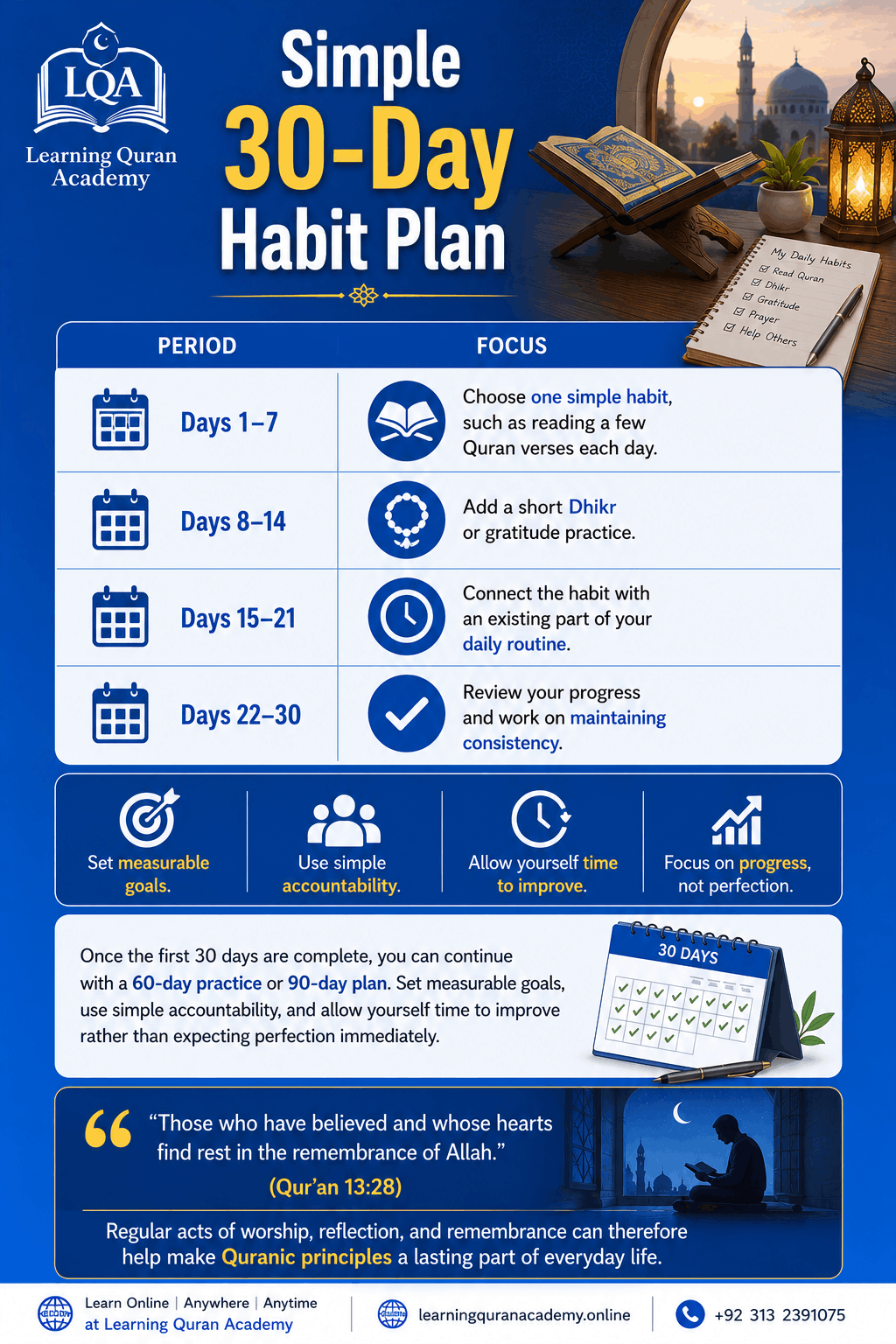
Simple 30-Day Habit Plan
- Days 1–7: Choose one simple habit, such as reading a few Quran verses each day.
- Days 8–14: Add a short Dhikr or gratitude practice.
- Days 15–21: Connect the habit with an existing part of your daily routine.
- Days 22–30: Review your progress and work on maintaining consistency.
Once the first 30 days are complete, you can continue with a 60-day practice or 90-day plan. Set measurable goals, use simple accountability, and allow yourself time to improve rather than expecting perfection immediately.
The Qur’an says that “hearts find rest in the remembrance of Allah” (Qur’an 13:28). Regular acts of worship, reflection, and remembrance can therefore help make Quranic principles a lasting part of everyday life.