Table of Contents
ToggleSummary First
This article on Rights of Relatives in Quran discusses Islamic teachings about family bonds, respect for parents, financial and emotional support,
maintaining kinship (Silat ar-Rahim), avoiding injustice, and the spiritual and worldly benefits of upholding family rights.
Table of Contents
Why Relatives Are Important in Islam: Quranic Insights
In Islam, relatives hold a significant place in both social and spiritual life.
The Quran emphasizes the importance of maintaining strong family bonds, considering relatives as part of our moral and ethical responsibilities.
Family ties are not just social connections; they are sacred relationships that reflect one’s character, empathy, and obedience to Allah’s guidance.
Islam teaches that caring for relatives is an act of virtue, bringing both spiritual rewards and inner peace.
Maintaining family relationships goes beyond occasional visits or greetings. It includes regular emotional support, guidance, and assistance in times of need.
Upholding these ties creates harmony within households and communities, reinforcing the moral framework encouraged in the Quran.
By showing care, respect, and kindness to relatives, believers strengthen their social responsibility while also earning Allah’s mercy and blessings.
The Quran explicitly mentions the sanctity of kinship:
“And fear Allah, through whom you ask one another, and the wombs (that bore you). Indeed Allah is ever, over you, an Observer.” (Surah An-Nisa 4:1).
This verse reminds believers that family connections are not merely cultural norms but divine obligations.
Observing these rights fosters ethical conduct, compassion, and moral accountability in daily life.
Understanding the significance of relatives according to Islamic teachings helps individuals cultivate a balanced life where spiritual and social duties intersect.
By prioritizing family ties, Muslims can ensure emotional well-being, social harmony, and a closer relationship with Allah.
In essence, relatives are more than companions—they are a reflection of one’s faith, character, and adherence to Quranic guidance.
Family in Islam: Understanding Quranic Guidelines for Ties
I still remember a time when my younger cousin faced a difficult phase after the sudden loss of his father.
Our family gathered together to support him emotionally and financially.
Witnessing this experience made me truly understand the profound wisdom in Islam regarding family.
Scholars often emphasize that a strong family structure is the foundation of a healthy society.
Love, respect, and obedience towards relatives are not merely cultural values but essential moral duties guided by the Quran.
The Quran provides clear instructions on how to treat relatives with care and affection. It states:
“And fear Allah through whom you ask one another, and the wombs. Indeed Allah is ever, over you, an Observer.” (Surah An-Nisa 4:1).
This verse reminds us that family relationships are sacred bonds established by Allah.
Maintaining these ties brings spiritual blessings, strengthens unity, and fosters societal harmony.
Tafseer scholars explain that respecting these bonds ensures mercy and divine guidance in personal and communal life.
Furthermore, the Prophet ﷺ emphasized the importance of family ties in a Hadith:
“The one who severs family ties will not enter Paradise.” (Sahih Bukhari).
This highlights the gravity of neglecting relatives.
Scholars interpret this as a warning that social and emotional disconnection from family members can lead to both spiritual and moral consequences.
Through my personal experience, I learned that caring for relatives is both a social and spiritual responsibility.
Following Quranic guidance on family relationships creates households built on trust, love, and respect, ensuring harmony and fulfilling our moral duties as Muslims.
Respecting Parents and Elders: Essential Quranic Duties
I once knew a man who never respected his parents or elderly relatives.
He often ignored their advice and rarely showed gratitude. Over time, I observed that his children mirrored his behavior, treating him with the same lack of respect.
This personal experience highlighted a crucial lesson emphasized by Islamic scholars:
honoring parents and elders is not only a moral duty but a cornerstone of family and societal harmony.
Islam teaches that showing gratitude and obedience to parents pleases Allah and strengthens the moral fabric of society.
“And We have enjoined upon man [care] for his parents. His mother carried him, [increasing her] in weakness upon weakness, and his weaning is in two years. Be grateful to Me and to your parents; to Me is the [final] destination.” (Surah Luqman 31:14).
Scholars explain that this Ayah emphasizes both physical and emotional care, recognizing the sacrifices of parents and making respect toward them a divine obligation.
The Prophet ﷺ also highlighted the importance of parents and elders, stating that kindness to them ensures spiritual reward and a blessed life.
By observing their rights, we cultivate gratitude, obedience, and moral excellence.
From my personal experience, I realized that neglecting parents leads to long-term consequences within families.
Respecting elders according to Quranic teachings ensures harmony, earns Allah’s pleasure,
and sets an example for future generations, reinforcing the essence of ethical and spiritual living in Islam.
Financial & Emotional Support for Relatives in Islam
My teacher once shared a story about a wealthy man who ignored his poor neighbor.
Despite having ample resources, he never offered financial or emotional support.
Over time, misfortune struck him, and his business collapsed. This experience highlighted a critical lesson in Islam: providing support to relatives and neighbors is both a moral duty and a form of worship.
In Islam, helping needy relatives is not limited to money alone. Emotional support, guidance, and care are equally important.
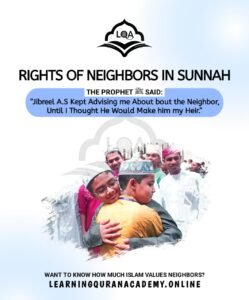
Strengthening family and neighborly bonds ensures social harmony and fosters empathy within the community. The Prophet ﷺ said:
“He is not a believer whose neighbor is not safe from his harm.” (Sahih Muslim).
Scholars explain that this Hadith emphasizes the ethical responsibility to protect and support those around us, including relatives, friends, and neighbors.
Providing financial and emotional assistance creates blessings in life and draws Allah’s mercy.
It also sets a moral example for the next generation, teaching them compassion and empathy.
Personal experiences and Islamic guidance show that neglecting this duty can lead to spiritual and worldly consequences,
while fulfilling it brings prosperity, contentment, and divine approval.
Maintaining Family Ties (Silat ar-Rahim) the Quran Way
I once met a non-Muslim friend who began reading the Quran out of curiosity.
He was particularly struck by the sections about family rights and Silat ar-Rahim.
Over time, he noticed that applying these principles—actively connecting and caring for relatives—improved his own family relationships tremendously.
This experience highlighted the universal wisdom in maintaining family ties, as emphasized in Islam.
Scholars often say that Silat ar-Rahim is more than occasional visits; it is a consistent effort to uphold love, care, and reconciliation within the family.
Breaking family ties is strictly prohibited in Islam. The Quran instructs:
“And those who join what Allah has ordered to be joined and fear their Lord, and they are conscious of Him.” (Surah Ar-Ra’d 13:21).
Tafseer scholars explain that this Ayah emphasizes the divine reward for preserving family bonds and the spiritual consequences for severing them.
It encourages believers to actively seek reconciliation, forgiveness, and unity within their families.
By practicing Silat ar-Rahim, one earns Allah’s mercy and strengthens social harmony.
Personal experiences, like my friend’s journey, demonstrate that respecting family rights creates closeness,
emotional support, and a moral framework that benefits both individuals and the wider community.
Avoiding Harm and Injustice Towards Family Members
My friend once met a man in our neighborhood who was known for indulging in sinful habits and often neglected the feelings of his family.
One Friday, he attended Jummah prayer at our local mosque for the first time.
Observing the sermon and listening to the Imam, he realized how Islam forbids causing harm or injustice to relatives.
This experience transformed his understanding of family responsibilities, and gradually, he began treating his family with fairness and compassion.
Islam strictly prohibits emotional or physical harm to relatives. Fair treatment and justice are essential to maintain healthy family relationships. The Prophet ﷺ said:
“Whoever believes in Allah and the Last Day, let him maintain the bonds of kinship.” (Sahih Bukhari & Muslim).
Scholars explain that this Hadith emphasizes ethical conduct and protection of relatives from harm.
Maintaining kinship involves both acts of kindness and refraining from injustice, ensuring social and spiritual harmony.
By practicing compassion and fairness, families experience trust, emotional stability, and unity.
Personal experiences, like the man from my neighborhood, show that neglecting these duties can lead to conflict and spiritual loss.
Upholding Quranic guidance on avoiding harm and injustice strengthens moral character, earns Allah’s pleasure, and nurtures strong, supportive family bonds.

Benefits of Upholding Rights of Relatives in Quran
Upholding the rights of relatives in Islam brings both spiritual and worldly benefits.
Observing family responsibilities is considered an act of worship, resulting in blessings, mercy, and barakah in life.
When individuals maintain strong family ties, they foster love, trust, and unity, which contributes to social harmony and a supportive community environment.
The Quran highlights the rewards of respecting and caring for relatives:
“Indeed, those who maintain family ties will be granted increase in their provision.” (Surah An-Nahl 16:90).
Scholars explain that this Ayah emphasizes both spiritual reward and worldly prosperity.
By fulfilling family obligations, believers earn Allah’s approval, divine blessings, and increase in sustenance, reflecting the interconnectedness of ethical behavior and material well-being.
Maintaining family rights also prevents conflicts, strengthens social cohesion, and establishes a framework of compassion and justice within households.
The Quranic guidance encourages believers to actively support relatives through care, respect, and emotional assistance, ensuring long-term harmony and moral excellence.
Following these instructions enhances personal character, reinforces family unity, and promotes a balanced life.
Upholding relatives’ rights according to the Quran leads to divine reward, societal benefit, and spiritual fulfillment,
demonstrating the importance of compassion, fairness, and ethical conduct in all aspects of family life.

Join Our Academy to Learn Quranic Family Rights Deeply
Learning Quranic family rights is essential for nurturing strong, compassionate, and ethically responsible households.
At Learning Quran Academy, students can enroll in a Quranic family rights course for practical Islamic guidance, designed to provide both spiritual and practical knowledge.
This course offers structured training on how to apply Quranic and Hadith teachings in daily life, ensuring that family responsibilities are fulfilled with wisdom, care, and justice.
The curriculum covers guidance on maintaining family ties, respecting parents and elders, providing financial and emotional support, and avoiding harm or injustice toward relatives.
It reflects the essence of Quran Family Peace Guidance, helping learners build harmony, compassion, and strong moral foundations within their homes.
Students gain practical insights into applying Islamic principles in real-life situations, fostering harmony, compassion, and ethical conduct within households.
By joining Learning Quran Academy, learners can study family rights comprehensively, combining traditional Islamic knowledge with modern life applications.
This course equips individuals with the tools to strengthen family bonds, earn Allah’s blessings, and create a nurturing, spiritually guided environment at home.
conclusion
The rights of relatives in the Quran emphasize compassion, justice, and unity as the foundation of a peaceful society.
Upholding family ties brings divine blessings, emotional harmony, and spiritual growth.
Islam teaches believers to respect, support, and protect their relatives as an act of faith and moral excellence.
These values connect the Quran and Daily Life, guiding Muslims to practice compassion, unity, and ethical living in every relationship.
By practicing these teachings, families strengthen love and cooperation within their homes and communities.
Following Quranic guidance on family relationships in Islam leads to a balanced life filled with mercy, prosperity, and Allah’s approval—a true reflection of Islamic ethics and social harmony.